.png)
The low-maintenance garden: what to expect (and the truth about no-maintenance gardens)


"We want something low maintenance." It's one of the most common things we hear from clients — and honestly, it's a completely reasonable thing to want. Life is busy. You invested in a beautiful outdoor space to enjoy, not to spend your weekends on your hands and knees in it.
But here's where we need to have an honest conversation, because "low maintenance" means very different things to different people — and if we don't get on the same page early, you'll end up disappointed, and your garden will end up neglected.
So let's clear a few things up.
There Is No Such Thing as a Zero Maintenance Garden
We'll say it plainly: every garden needs some level of ongoing care. Even the most carefully designed, drought-tolerant, pebble-mulched xeriscape needs attention through the year. What we can do — and what we're very good at — is to design a garden that significantly reduces the maintenance required, while still looking beautiful. But the expectation of touching it once or twice a year and having it look immaculate? That's not realistic and any landscaper who tells you otherwise is setting you up for a letdown.

Even the lowest maintenance garden will require:
Watering — particularly for the first few months after planting, until roots are properly bedded in. They'll also need water during dry spells, even for drought-tolerant plants. This is where we recommend investing in irrigation to make this easier. Even with irrigation though, some plants (such as Lilly Pilly / Syzygium smithii hedges) will still want an occasional deep drink from the hose in the absence of rain.
Fertilising — typically twice a year to keep plants healthy and looking their best. If you want your garden looking superb though, applying Seasol a few times through spring and summer will make the world of difference.
Pest and disease checks — a quick walk-around and spot-check to catch problems early before they spread. Pests and diseases such as Citrus Leaf Miner, Scale insects, Olive Lace Bug and Mealy bugs can take hold fast and damage your plants terribly if you don't catch them in time. These tend to be seasonal, so spring is the time you'll want to do a 2 minute walk through your garden and spot check each week or two.
Occasional pruning and tidying — to keep the design looking intentional, not overgrown
Weeding — particularly in pebbled or open-mulched areas where seeds blow in
The goal of good low maintenance design isn't to eliminate all maintenance (that's the job of concrete!), the goal is to maximise the time you spend enjoying your yard, while minimising the time you spend maintaining it.
We provide a maintenance guide for our gardens, detailing your plants and how to care for them and we trust that in learning the basics of how to look after your garden, you'll find caring for it quite rewarding and enjoyable. There is a tranquil delight in spending an afternoon weeding, pruning and fertilising your garden and then watching it thrive over the coming weeks.

How much maintenance does my lawn require?
If you have natural turf in your garden, we'll be honest: there is no truly low maintenance lawn. Natural grass needs mowing, watering, fertilising, and the occasional patch repair — that's just the nature of living grass. Even the slower-growing varieties like Sir Grange Zoysia, which we love for its lush, manicured finish, still needs an annual scalp - which is a solid weekend's work, as well as regular attention. to keep it weeded and thriving.
If a no-fuss lawn is genuinely your priority, synthetic turf is the most honest answer. It won't win any environmental awards, but it stays green year-round and the mower can stay in the shed. We cover this in more detail in our Turf Wars blog post — worth a read if you're weighing up your options.
In a nutshell though, if you're making a call on grass, Sir Walter Buffalo is easy, pet friendly, does ok in winter and in the shade, but grows about twice as fast as Sir Grange Zoysia. In a mild summer with plenty of rain, you can expect to need to mow it weekly.
Sir Grange looks like a perfect golf course and only requires half of the mowing, but that annual scalping is a pretty brutal exercise and it absolutely does not like pet wee. If you've got a great, sunny spot with no pets, and can financially manage getting a lawn-care service to come in a couple of times a year, this is a great option.

Designing a low maintenance garden: smart choices that pay off
The good news is that smart plant and material selection makes an enormous difference. Here's how we approach low maintenance design:
Embrace the Xeriscape garden
Xeriscaping — from the Greek word xeros meaning dry — is a design philosophy built around choosing plants that thrive in your local climate with minimal supplemental watering once established. In Sydney and the Sutherland Shire, where we deal with hot summers, periodic water restrictions, and everything from coastal conditions to heavy clay soils, xeriscape principles are not just smart — they're practical.
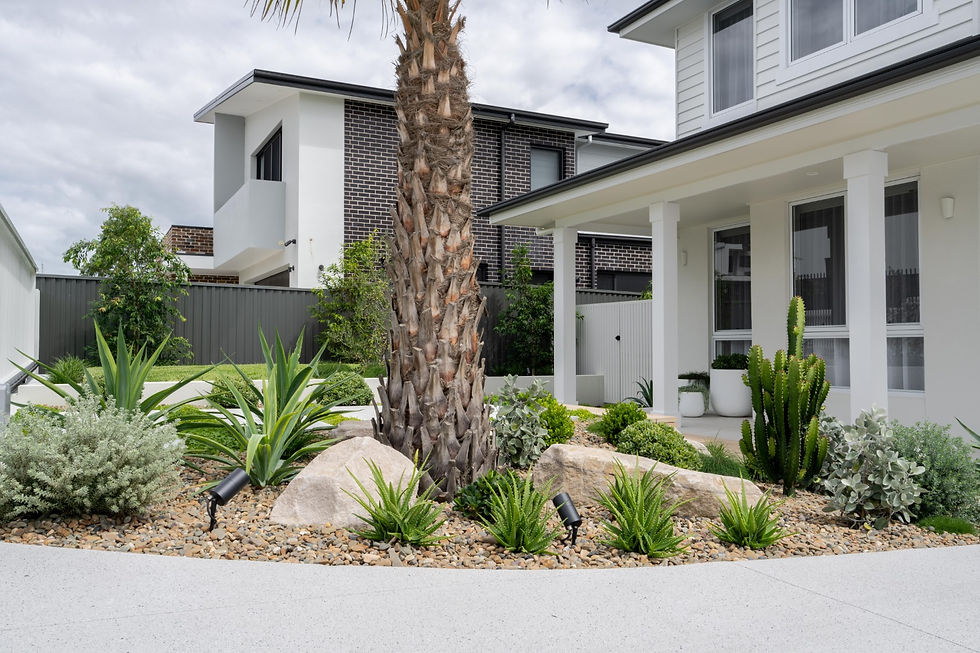
Think Palm Springs desert-luxe aesthetics: sculptural agaves, bold cacti, silver-leafed succulents and architectural grasses set against clean paving and pale pebble groundcovers. It's a look that's genuinely stunning, photogenic as all get-out, and far more forgiving than a traditional planting scheme.
Use Pebbles Wisely
Pebble mulch is one of the best tools in a low maintenance garden's arsenal. It suppresses weeds, retains moisture, reduces the need for organic mulch top-ups, and looks incredibly clean and contemporary. We use it extensively in xeriscape and desert-style gardens.
A couple of things to know: pebbles don't eliminate weeds — wind-blown seeds will still land and germinate, so a weed mat layer underneath and occasional spot-spraying is still part of the deal. And pebble beds need to stay clean — leaf litter sitting on pebbles looks messy fast, which brings us to our next point.

Avoid These Common Culprits
Bamboo — we rarely recommend it for residential gardens unless vertical coverage is essential. It drops leaf litter constantly, and creates ongoing maintenance that clients rarely anticipate. The look can be beautiful, but it's far from low maintenance, especially around pools.
Large-leafed deciduous trees near paved or pebbled areas — gorgeous in autumn, nightmare to clean up. If you love the look, consider placement carefully so leaf drop lands on turf or garden beds rather than paving.
Fast-growing hedges — Lilly Pilly is a popular choice and we do use it, but understand that a hedge that grows quickly is also a hedge that needs trimming regularly to stay tidy.
A Note on Natural Stone
Here's something that surprises a lot of clients: natural stone requires maintenance too. It's not set and forget.
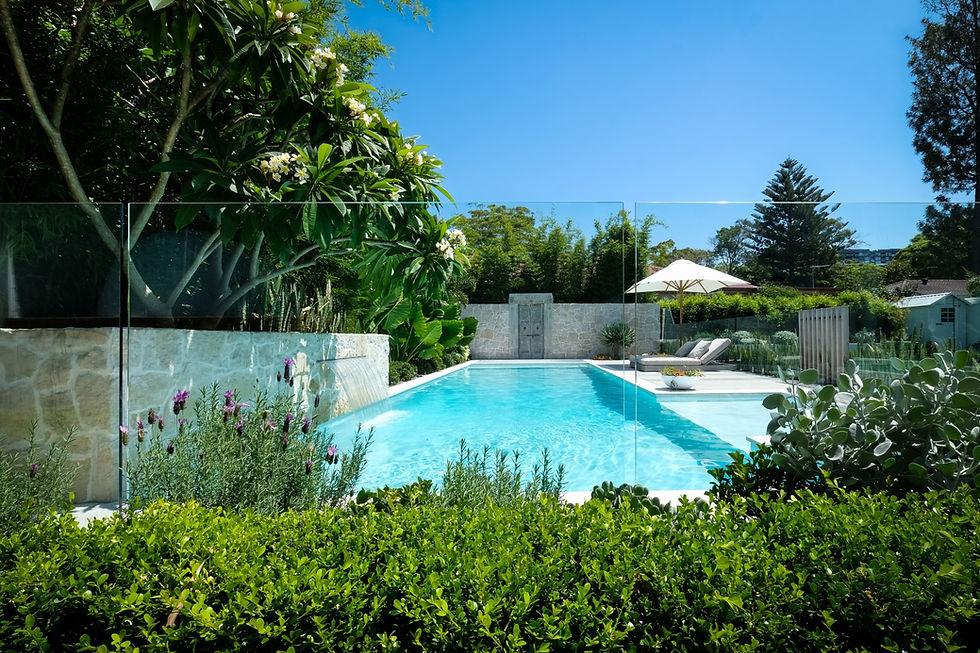
Sandstone, limestone, travertine and other natural pavers are beautiful, timeless materials — and we work with them constantly. But they're porous, which means they absorb moisture, algae and staining over time. To keep them looking their best:
Sealing is recommended at installation and periodically thereafter (typically every 5 years depending on the stone and exposure) Note that sealing does not prevent staining. It makes the stone a bit hydrophobic and buys you extra time to clean it up. If you things that will mark on it for an extended period, such as wet, decaying leaves or food, your stone will stain.
Algae and mould will grow on natural stone in shaded or damp areas — a periodic pressure wash will freshen it up.
None of this is onerous and we believe it's absolutely worth it for the superior tactility and natural beautfy of stone, but it does need to be factored into your expectations. If you want the absolute lowest maintenance hard surface, porcelain pavers are worth considering. They're non-porous, don't need sealing, clean up easily, and the quality and variety available today is quite impressive, though the grout is still susceptible to staining.

The Bottom Line -
A well-designed low maintenance garden is absolutely achievable — and we design them all the time. The key is being intentional about every choice: the right plants for your conditions, smart use of pebbles and mulch, quality hard surfaces that age gracefully, and a planting palette that's been selected to thrive with minimal intervention.
What it isn't, is a plant-and-done deal. Your garden is a living, growing, evolving space — and a little regular love, even just an hour or two a month, (plus more in spring) is what keeps it looking like the investment it is.
If you'd like to talk through a low maintenance design for your property, we'd love to help. Get in touch with the team at Corey Fox Landscaping and let's create something beautiful that actually works for your lifestyle.
